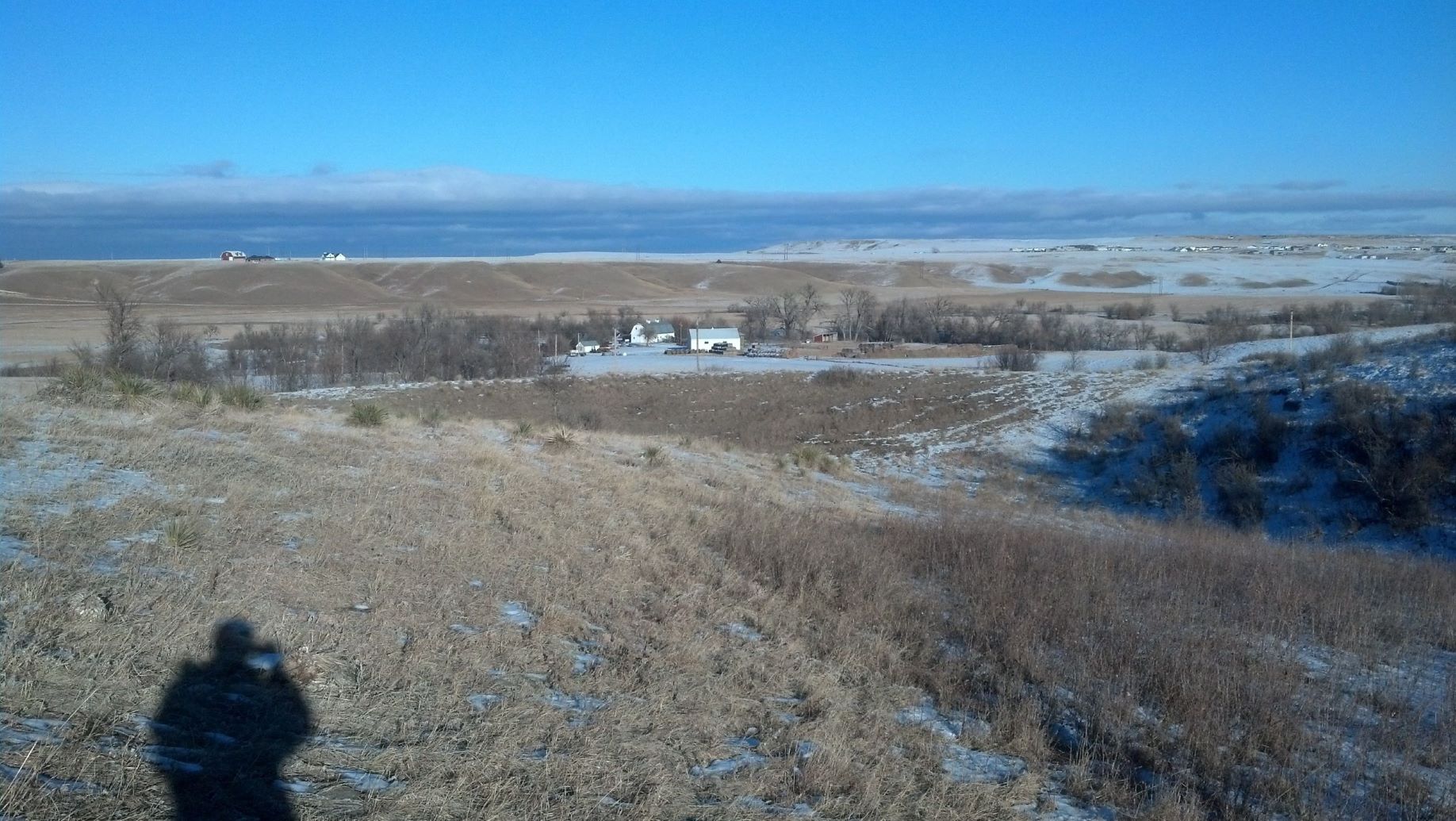
I’ve never known why my dad chose to have calving season in the coldest, snowiest part of the year. He had control over it, he was the one that brought the bulls to the cows in May. I suppose that it was so that the calves had as much time with their mothers before they had to be weened, but even then, he could choose when that happened, too.
Regardless, every February, we would start calving season. We always kept the heifers at home, since they were more likely to need help, and the cows were kept out at pasture. I’ll talk about the heifers another time, that’s a can of worms in and of itself. For now, let’s talk about the cows.
The cows took care of themselves, for the most part, if it was a mild winter. Put them in a pasture that hadn’t been grazed most of the summer, and the cows convert the grass into calves. Neat! You’d still go check on them occasionally, but it is a process that nature is happy to manage on it’s own, otherwise.
If it was a cold winter, though, with enough snow to bury the grass, my dad would go out every couple days to bring them a bale of hay, and they’d come bounding up to the sound of the tractor, excited for the oh so yummy alfalfa. He’d roll out the bale, they would start to eat, and he would look for the new calves bouncing along after their mothers.
If he found a new calf, he would get out his little calving book (it’s a thing, just little soft cover books, about the size of 1/8th of a standard letter page), and write down the number of the mother cow and the date, get out his bottle of ear tag paint and an ear tag, paint on the number to match the mother, and hang it from the fins of the heater vent in the tractor to dry. Then he’d just sit, and watch the cows, and see how they were doing, usually talking to himself, or the dogs, or the cows, in the sing-songy way he’d talk to animals, but never us.
I think I always kinda felt like he liked the animals more than he like me and my brother. He was just so… tender(?) with the cows and the dogs and the barn cats, petting them and scratching them and “you’re just a little dirty dog, aren’t you”ing them. Looking back, I think it’s really that he wasn’t expecting more out of them, they fit his vision for what they needed to be. But my brother and I were just growing up in such a different world than what he knew or remembered from when he was a kid. I think he just wanted us to fit into our place as ranch kids, when we all knew that that probably wasn’t gonna happen, and we were all a little… uneasy about the balance.
Once the tag was dry, he’d get out with the ear tag applicator (Gun? I don’t remember what we called it. I think it was gun, but it looked more like a pair of pliers) and go to put the tag in the calf’s ear. The cows knew my dad, and were excited to see him, and trusted him, so they’d let him walk right up to their calves, straddle over their backs, and essentially pierce their ears with the applicator. The calf would barely flinch, and run back to it’s mom once my dad got off it’s back. Getting back in the tractor, he might make a couple notes about the calf’s sex, or health, or size, or color, but otherwise just move on to more prosaic tasks like chopping the ice.
I feel like I want to talk about chopping the ice here, just because I don’t know when else I’d mention it, but this is probably one of the more fun things I remember from childhood winters with the cows. So, here it goes.
In modern ranching, I think most people have moved on to using automatic waterers to make sure their cows have something to drink. These are essentially drinking fountains, but instead of a stream of water, it’s just a bowl that stays topped up all the time, and a heating element to keep it free of ice in the winter.
But back when I was a kid, though, especially for the cows, we never had the herd anywhere where there was electricity or running water. Most of the time, the only source of water was a stock dam (usually, this just means a wall of dirt across a gully or small valley). Since most of these stock dams weren’t fed by running water, they would freeze over fully in the winter, so we would have to go out daily with an axe to chop a rectangular hole in the ice for the cows to drink from.
There is something satisfying about swinging an axe just at the ground, rather than trying to hit a log. You can really put all your strength behind it, and as long as you hit somewhere within a two square foot area, it didn’t matter. Swing, and ice chips fly out, swing again, and you get a spray of water. Chop two sides, then turn 90 degrees and chop the other two. Use the axe head to scoop out the ice chunks, and voila! Suddenly, you’re surrounded by thirsty cows.
I think I miss seeing that relationship that my dad had with the cows. It was a very practical kind of love, that I don’t know that I’ve seen anywhere else in my life. It wasn’t that he was an animal lover, exactly, but he knew that those cows were his livelihood and reputation, and future.
He knew that he had to take care of them so they would thrive and keep producing good stock. He knew that he had to be able to work with them, so they couldn’t be scared of him, so he treated them well, and scratched their noses, and just was generally happy when he was with them. I think I saw him smile more at those cows than at anything my brother and I did in school.
And he knew that when he took those cows to the sale barn, people would pay more for his cows, because they knew they would be gentle and easy to work with. It’s one of the benefits of being part of a small community.
He was never overly sentimental about them, he never gave them names, and he certainly would never say that he loved them. But he absolutely needed them.
Leave a Reply