Author: aarpn

  • Mantras for Snow Days

    Mantras for Snow Days

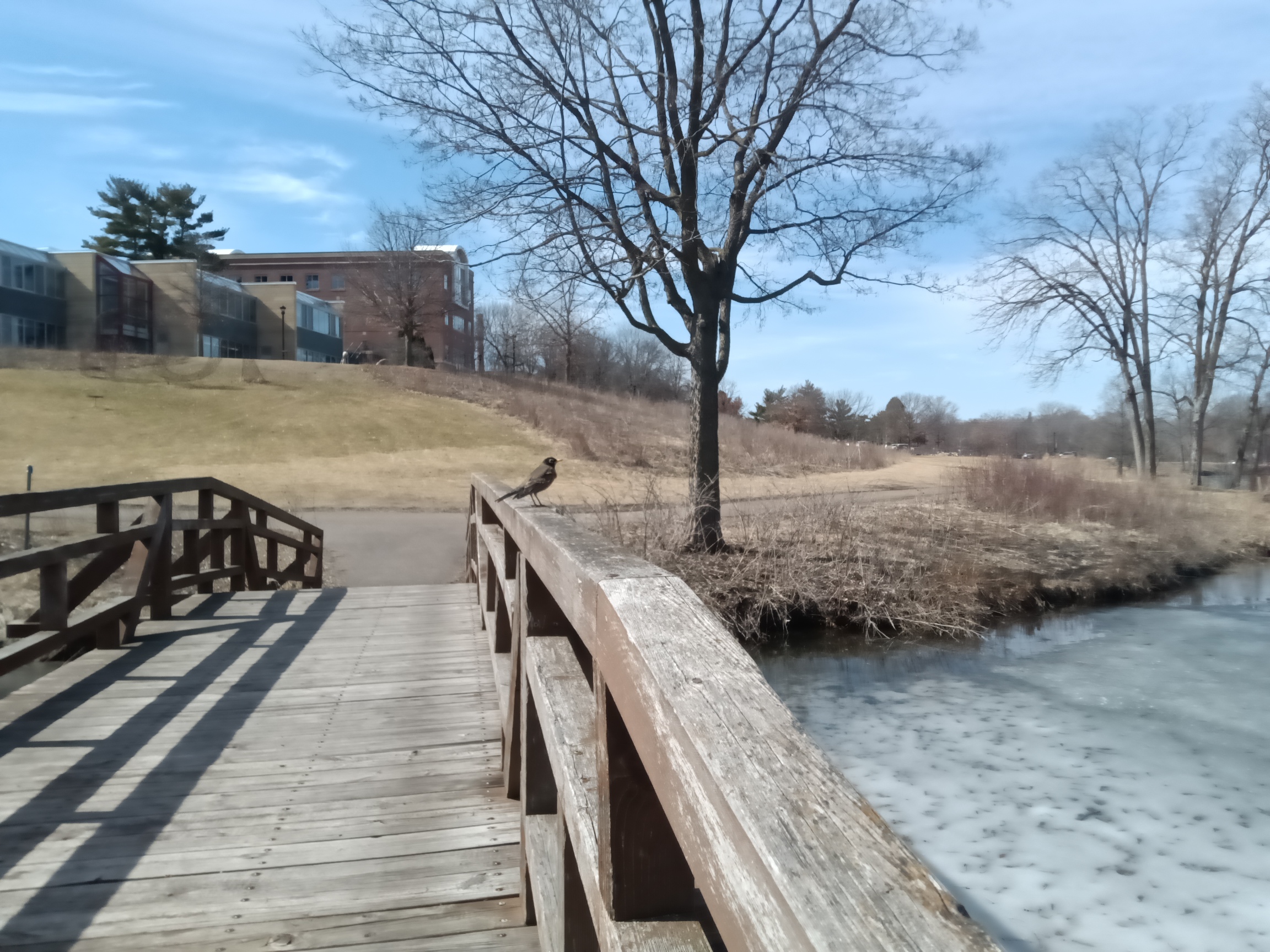
    You’re pretty sure winter isn’t meant to be brown.

    Winter is meant to be red berries on bushes bent by pure white snow with stark black branches against crystal blue skies cloudless for miles. Cloudless for miles except for when it’s not and the sky is no longer an abyss but an embrace from an old friend and all the streetlights bounce reflect illuminate a perfect silent snowglobe, the snowglobe of the meant-to-be winter.

    Meant-to-be, could-be, maybe even should-be, but isn’t. Cuz this winter be BROWN. Brown grass and brown leaves against brown mud of snow thawed too soon, or worse, snow that wasn’t even given a chance, because it rained all February.

    So, you scoff when they say blizzard, because how could a blizzard ever happen now, your world is brown and blizzards don’t happen to brown. And why should you get your hopes up that eventually there won’t be brown even though there will always be brown.

    And the storm comes and knocks branches from trees and blows over your garbage can and you think, this is the storm I expected, this is the storm I deserve. anyway, I think the street looks better full of my old shoes and coffee grounds, and yes, my car needed another dent, thank you, tree.

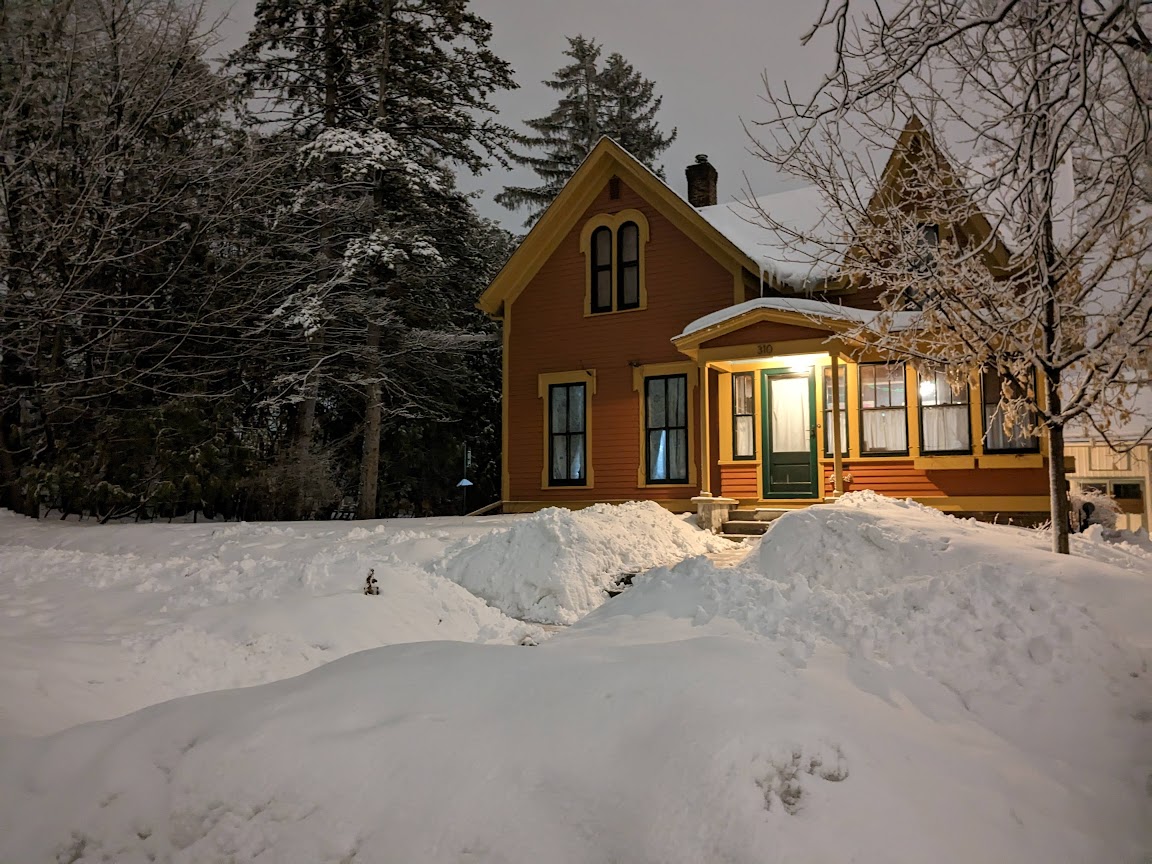
    But that night, the wind stops, and the sky bends down, and wraps the world in its arms. And suddenly the clouds aren’t clouds but a dome, lit from within, brighter than you can believe, and the fluffiest flakes you’ve ever seen fall freely from who knows where since there aren’t clouds anymore just a perfect, luminous dome above you.

    And you want to watch it snow, but you know that you shouldn’t, that it ruins the magic if you watch. So you shuffle off to bed like a kid at Christmas, wondering what the morning will bring.

    And it snows and it snows and it snows, and suddenly the world changes from the world of is to the world of meant-to-be, could-be, maybe even should-be.

    Could-be is a world of questions possibilities problems beauty. The world that might be, the world of what-if?

    What if the streets are actually gone, and now there’s just unmarked white snow leading to unbounded adventures in this wild wonderful world, leading there, instead of my stupid boring old job?

    What if my car is buried so deep, it will never see the light of day again, what if every car succumbed to the same fate, and now we have to walk to adventure, but hopefully not too far?

    What if my kids are feral now, wild creatures who roam the vasty white not-roads, hunting in packs, searching eternally for a better snowball?

    What if my partner really is this dazzling snow-flecked spectacle, free of worry, five foot three frame full of joy and bouncing playfulness?

    What if every day was no school no work no worries just back aches from shovelling too much snow, snow that never stops falling in this ridiculous snow globe world. Who thought this was a good idea?

    And you love this beautiful could-be world, but you know it’s not really your world, it’s just visiting. And even though you love its beauty, what you actually love is seeing your world made fresh, hearing new joy in your kids’ laughter, seeing old beauty in your partner’s smile that you knew was still there, but had been so hard to see in all that BROWN.

    And you know that the snow can’t stay, because the only way for the snow to stay is to lose the rest of the beauty of your world, the beauty of the world in cycles.

    So, you’re sad to say goodbye to the snow, and when it melts, you get mud, and maybe you even get stuck in the mud for a while. But eventually, the mud dries, and you see spring summer fall, and you’ll take your family camping trying to remember that could-be world of no streets and no cars just laughter and the beauty of your loved ones.

    And maybe someday, that snow will come back to you, will find a way to say hi, a way for the could-be to become the is. After all, snow is water and water is life and life is lived here and now. So live here and now, and be patient.

    Everything moves in cycles.
  • Calving the Cows

    Calving the Cows

    I’ve never known why my dad chose to have calving season in the coldest, snowiest part of the year. He had control over it, he was the one that brought the bulls to the cows in May. I suppose that it was so that the calves had as much time with their mothers before they had to be weened, but even then, he could choose when that happened, too.

    Regardless, every February, we would start calving season. We always kept the heifers at home, since they were more likely to need help, and the cows were kept out at pasture. I’ll talk about the heifers another time, that’s a can of worms in and of itself. For now, let’s talk about the cows.

    The cows took care of themselves, for the most part, if it was a mild winter. Put them in a pasture that hadn’t been grazed most of the summer, and the cows convert the grass into calves. Neat! You’d still go check on them occasionally, but it is a process that nature is happy to manage on it’s own, otherwise.

    If it was a cold winter, though, with enough snow to bury the grass, my dad would go out every couple days to bring them a bale of hay, and they’d come bounding up to the sound of the tractor, excited for the oh so yummy alfalfa. He’d roll out the bale, they would start to eat, and he would look for the new calves bouncing along after their mothers.

    If he found a new calf, he would get out his little calving book (it’s a thing, just little soft cover books, about the size of 1/8th of a standard letter page), and write down the number of the mother cow and the date, get out his bottle of ear tag paint and an ear tag, paint on the number to match the mother, and hang it from the fins of the heater vent in the tractor to dry. Then he’d just sit, and watch the cows, and see how they were doing, usually talking to himself, or the dogs, or the cows, in the sing-songy way he’d talk to animals, but never us.

    I think I always kinda felt like he liked the animals more than he like me and my brother. He was just so… tender(?) with the cows and the dogs and the barn cats, petting them and scratching them and “you’re just a little dirty dog, aren’t you”ing them. Looking back, I think it’s really that he wasn’t expecting more out of them, they fit his vision for what they needed to be. But my brother and I were just growing up in such a different world than what he knew or remembered from when he was a kid. I think he just wanted us to fit into our place as ranch kids, when we all knew that that probably wasn’t gonna happen, and we were all a little… uneasy about the balance.

    Once the tag was dry, he’d get out with the ear tag applicator (Gun? I don’t remember what we called it. I think it was gun, but it looked more like a pair of pliers) and go to put the tag in the calf’s ear. The cows knew my dad, and were excited to see him, and trusted him, so they’d let him walk right up to their calves, straddle over their backs, and essentially pierce their ears with the applicator. The calf would barely flinch, and run back to it’s mom once my dad got off it’s back. Getting back in the tractor, he might make a couple notes about the calf’s sex, or health, or size, or color, but otherwise just move on to more prosaic tasks like chopping the ice.

    I feel like I want to talk about chopping the ice here, just because I don’t know when else I’d mention it, but this is probably one of the more fun things I remember from childhood winters with the cows. So, here it goes.

    In modern ranching, I think most people have moved on to using automatic waterers to make sure their cows have something to drink. These are essentially drinking fountains, but instead of a stream of water, it’s just a bowl that stays topped up all the time, and a heating element to keep it free of ice in the winter.

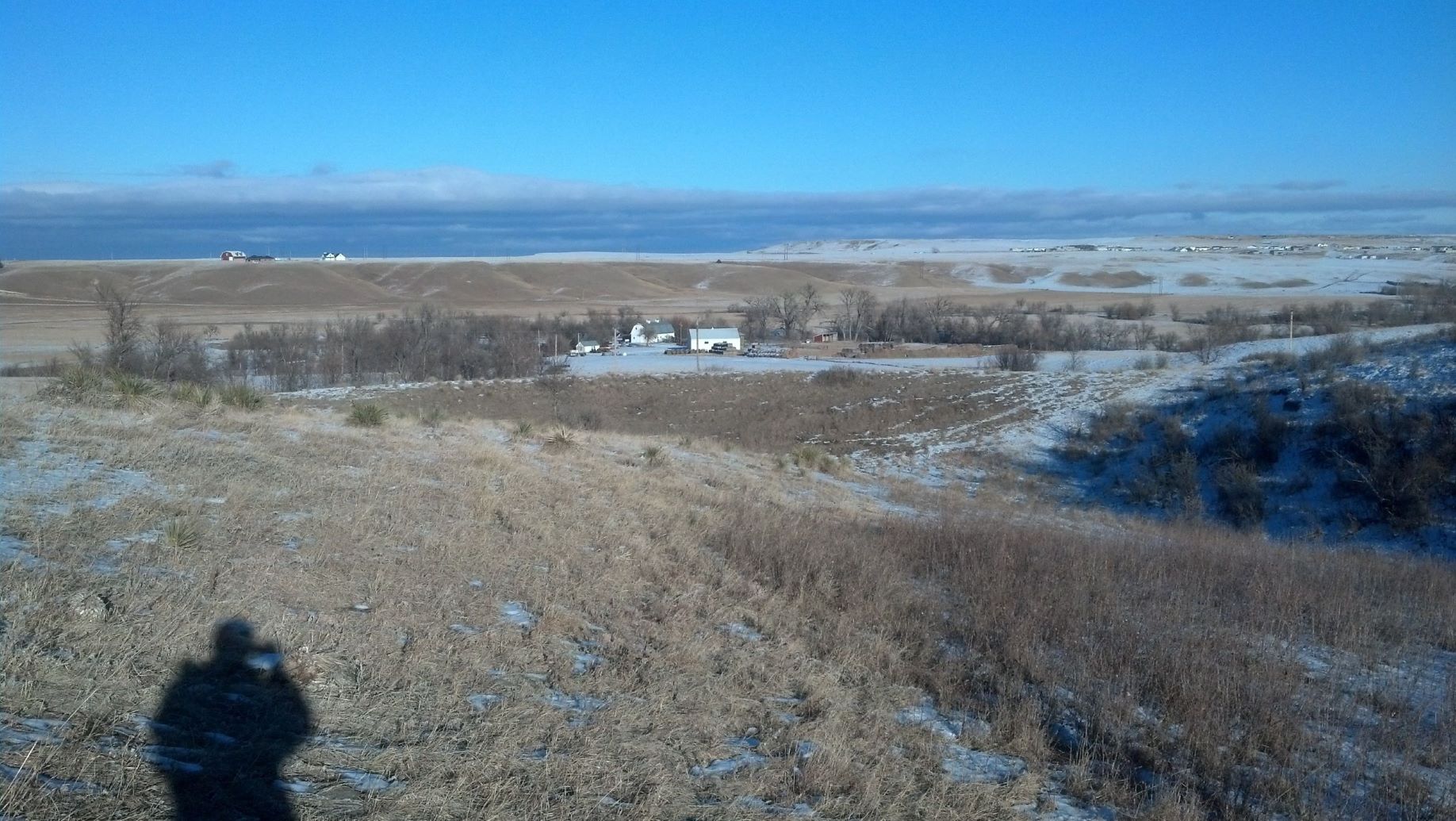
    But back when I was a kid, though, especially for the cows, we never had the herd anywhere where there was electricity or running water. Most of the time, the only source of water was a stock dam (usually, this just means a wall of dirt across a gully or small valley). Since most of these stock dams weren’t fed by running water, they would freeze over fully in the winter, so we would have to go out daily with an axe to chop a rectangular hole in the ice for the cows to drink from.

    There is something satisfying about swinging an axe just at the ground, rather than trying to hit a log. You can really put all your strength behind it, and as long as you hit somewhere within a two square foot area, it didn’t matter. Swing, and ice chips fly out, swing again, and you get a spray of water. Chop two sides, then turn 90 degrees and chop the other two. Use the axe head to scoop out the ice chunks, and voila! Suddenly, you’re surrounded by thirsty cows.

    I think I miss seeing that relationship that my dad had with the cows. It was a very practical kind of love, that I don’t know that I’ve seen anywhere else in my life. It wasn’t that he was an animal lover, exactly, but he knew that those cows were his livelihood and reputation, and future.

    He knew that he had to take care of them so they would thrive and keep producing good stock. He knew that he had to be able to work with them, so they couldn’t be scared of him, so he treated them well, and scratched their noses, and just was generally happy when he was with them. I think I saw him smile more at those cows than at anything my brother and I did in school.

    And he knew that when he took those cows to the sale barn, people would pay more for his cows, because they knew they would be gentle and easy to work with. It’s one of the benefits of being part of a small community.

    He was never overly sentimental about them, he never gave them names, and he certainly would never say that he loved them. But he absolutely needed them.

  • Mantras for mud puddles.

    Mantras for mud puddles.

    First it’s winter and dark and cold and snow and waiting, always the waiting.

    Then the wind shifts and comes from the south and brings fresh scents of promise and sometimes more cold, but not the same cold. A warmer cold, a wetter cold, a cold that is just stopping by to say hi.

    But the sun wakes up and lifts it’s head after a lazy winter and climbs higher in the sky and slowly slowly makes the earth start to vibrate heat warm.

    Warmth means melt means water means mud, at least it should, if you’re living right, if you ever step off the sidewalk.

    Sidewalk mud isn’t real mud, sidewalk mud is just dirty water salt sand leaves dog poop.

    Real mud is field forest yard playground honest to goodness dirt plus water plus feet and trodding and stomping and joy and laughing and forgetting that someone is gonna have to do this laundry.

    Real mud gets on your boots and on your pants and on your socks and oh my god how did mud even GET there. You didn’t even think that was a place you could get mud.

    And you love the mud but you hate the mud and sometimes you forget that you ever loved the mud, in those moments when you realize that YOU are the one that has to do that laundry, and clean those floors, and wash those kids, and hey, that was my flower garden.

    And then you get stuck in the mud, but not even the real mud, just the mud that’s always there, the mud that brings you down little by little and gets in your head and gets in your brain and oh my god how did mud even GET there.

    It’s the mud that comes with being the adult in the room, the mud of practicality, of “it’s a weeknight”, of “I can’t play, I’m too busy”. It’s the mud of having to grow up, of hats-not-elephants-in-snakes, the mud of the Swamp of Sadness that swallows your pony.

    And then you forget that there was ever anything BUT mud, and getting stuck, and falling down, and losing your boots, and almost following poor, sad Artax.

    But then you remember that with the mud comes the buzz of life-in-process, the sticky wet stains on the sides of maples and squirrels licking at broken branches and those oh so wonderful freeze distilled icicles as sweet as popsicles.

    And then you remember that what’s the point of doing the laundry and cleaning the floors and washing those kids if they don’t get muddy in the first place, that mud BELONGS in those places you didn’t think you could get mud.

    And then you remember that you DO love the mud, the real mud, the mud that is day-to-day in-the-moment honest to goodness joy plus tears plus hands plus home and hard work and failures and successes, the mud that is life-worth-living.

    The kind of mud you only find when you step off the sidewalk and let yourself find it.

  • Mantras for long road trips

    Mantras for long road trips

    Are we there yet?

    You take the trip to get to your destination.

    Sometimes, you can’t wait to get to your destination.

    Sometimes, you don’t want to get to your destination.

    Sometimes, you don’t want the trip to end.

    The trip always ends.

    The trip doesn’t always end where or when you expect.

    Are we there yet?

    Stop and smell the roses.

    Not all roses are worth smelling.

    The roses that are worth smelling look like the roses not worth smelling.

    The gas station roses are never worth smelling.

    Stop and smell the roses.

    We’re not stopping to smell any more roses, or we’ll never get there.

    Do we have any snacks?

    No one likes a hangry passenger.

    Well, no one likes a hangry driver!

    You should have packed more snacks.

    It’s not always my job to pack the snacks!

    Sometimes, it’s always your job to pack the snacks.

    There are never enough snacks.

    Are we there yet?

    Mom, he poked me!

    Stay on your side of the car.

    It’s hard to remember which side of the car is yours when you’re bored.

    She started it!

    Sometimes, she did start it.

    Usually, it doesn’t matter who started it.

    Do I need to come back there and end it?

    You will never end it.

    Are we there yet?

    Four horses!

    They’re mine, I saw them first!

    You can’t find horses if you’re not looking.

    Cemetery, you lost all your horses!

    I’m not even playing!

    You are always playing.

    Are we there yet?

    What’s that smell?

    I think it was the dog.

    Sometimes, it is the dog.

    Sometimes, he who smelt it, did dealt it.

    Often, it’s just a turkey farm.

    Are we there yet?

    You will never be there.

    You will always be here.

    You will never be anywhere but here.

  • Mantras for Makers

    Mantras for Makers

    Making is saying yes.

    Saying yes leads to making.

    Making leads to choices.

    Choices lead to decisions.

    Decisions lead to action.

    Decisions are not permanent.

    Nothing is permanent. Not even permanent marker.

    It’s a lady’s prerogative to change her mind.

    Minds aren’t where ideas come from.

    Ideas come from broken headphones curves of paths frays on sweaters snippets of conversations rhythms of lovers breath.

    Ideas also come from knock knock jokes candy corn hot topic sitcoms nachos indigestion upset stomach diarrhea hey pepto bismol.

    Ideas are wild things, that curl into your brain through your eyes and ears and touch, and make a nest and start having baby ideas with the other wild ideas.

    Not all baby ideas are good ideas.

    Some baby ideas are downright terrible.

    Terrible ideas can still have baby ideas.

    Sometimes, the babies from terrible ideas are amazing ideas.

    Minds are where ideas grow up, but not where they should live.

    A full mind overflows, but is never full.

    Making without purpose is not making.

    Anything can be a purpose.

    Making is done with your hands, but also your brain, but also your frustration, but also your joy, and also sometimes hot glue.

    Hot glue burns your hands, but eventually it won’t.

    Calloused hands are the outward sign of perseverence.

    There is no such thing as making from scratch.

    There’s no such thing as Do-it-yourself.

    Making is community.

    Making makes community.

    Nothing is made without context.

    Context is made through connection.

    Connections are people, but also places, but also books, but also history, but also bolts, screws, nails, rope, duct tape, hope, prayers, dreams.

    To make something is to make yourself; make yourself proud, make yourself frustrated, make yourself happy, make yourself better, make yourself confused, make yourself contented.

    Confusion makes better ideas than clarity.

    Never trust clarity, Pigeon, clarity always lies.

    Clarity means you don’t have all the information.

    If you think you know what you’re doing, try doing it differently. But safely. Wait. Stop. What are you doing. Don’t hold a drill like that.

    Sometimes, there’s only one way to do a thing.

    Sometimes, you don’t need to re-invent the wheel.

    Sometimes, you re-invent the wheel so you know why wheels are round.

    Sometimes, you just need to know.

    Needing to know is usually the first step to making a mess.

    Making a mess IS still making. But, you have to clean it up yourself, I’m not your mother.

    Making mistakes is making.

    You can’t learn anything without making mistakes.

    Mistakes are the worst thing, temporarily.

    Mistakes are the best thing, long term. This might not be true, but it sounds good.

    If it sounds like a good idea, and looks like a good idea, it still might be a terrible idea.

    Terrible ideas can have excellent PR teams.

    Sometimes, all you have are terrible ideas.

    Don’t be afraid of terrible ideas.

    A terrible idea is infinitely better than no idea.

    There’s no such thing as a terrible idea.

  • Mantras for Fixing Fence

    Mantras for Fixing Fence

    Nature is cyclical.

    Life is cyclical.

    Winter becomes spring becomes summer becomes fall becomes winter.

    Feeding cows becomes calving becomes fixing fence becomes haying becomes feeding cows.

    Good neighbors make good fences.

    Good fences show that someone cares.

    You have to fix your own fences, if you want your cows to stay put.

    The left half is yours to fix. This is never discussed.

    There will always be fence to fix.

    The same fences will always need fixing.

    The same fence will never be the same.

    The same fence never surrounds the same pasture.

    The pasture is the grass dams birds coyotes dirt bones roots rabbits winds sun sky.

    Every pasture is the same.

    Every pasture is unique.

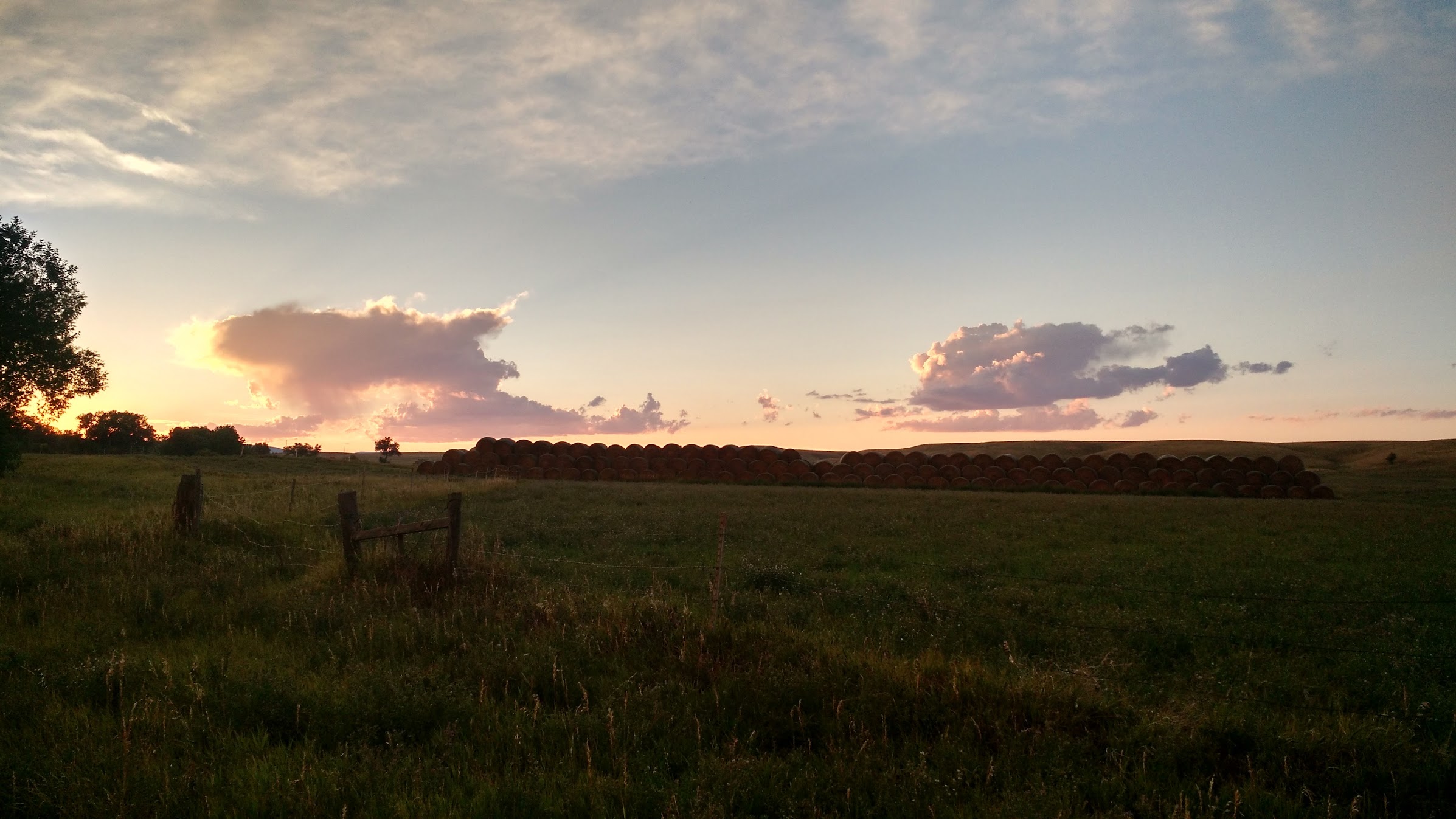
    The pasture is just prairie without the fence.

    The pasture is just prairie with a fence.

    The pasture is the prairie.

    The prairie is not a pasture, or the pasture, or any pasture, or all the pastures.

    The prairie is barren, devoid of life. At least, when viewed from the highway.

    The prairie is teeming with life, if you stop to look.

    The prairie is nothing but life, if you look too close.

    Life is nothing but the prairie, if you look too far.

    The birds sing, but actually whistle, but actually neither.

    Vultures are signs of life, formerly.

    That kildeer’s wing isn’t broken. Birds are liars.

    Turtles show up when you least expect them.

    Sometimes, there are fish in the puddles. How did you get there, fish?

    Not all rattlesnakes rattle.

    Post holes are excellent ways to catch salamanders.

    Sometimes, the hill is too steep to drive up.

    Sometimes, the hill is too steep to walk down.

    Sometimes, that rock is a fossil.

    Most of the time, that rock is a rock.

    Very infrequently, that rock was actually an unexpected turtle.

    Sometimes, the buffalo berry bush is a fence all by itself.

    Unfortunately, the poison ivy is never a fence all by itself.

    Sometimes, the poison ivy can keep that pair of fence pliers.

    Sometimes, that was your last pair of fence pliers.

    Always, you wonder when you’ll be done fixing fence.

    Always, you’ll be fixing fence.

    Always, you’ll be fixing.

    Always, you’ll be.

    Always.